
India-Central Asia dialogue deepens business, strategic ties amid geopolitical turbulence
By Alpaslan Düven
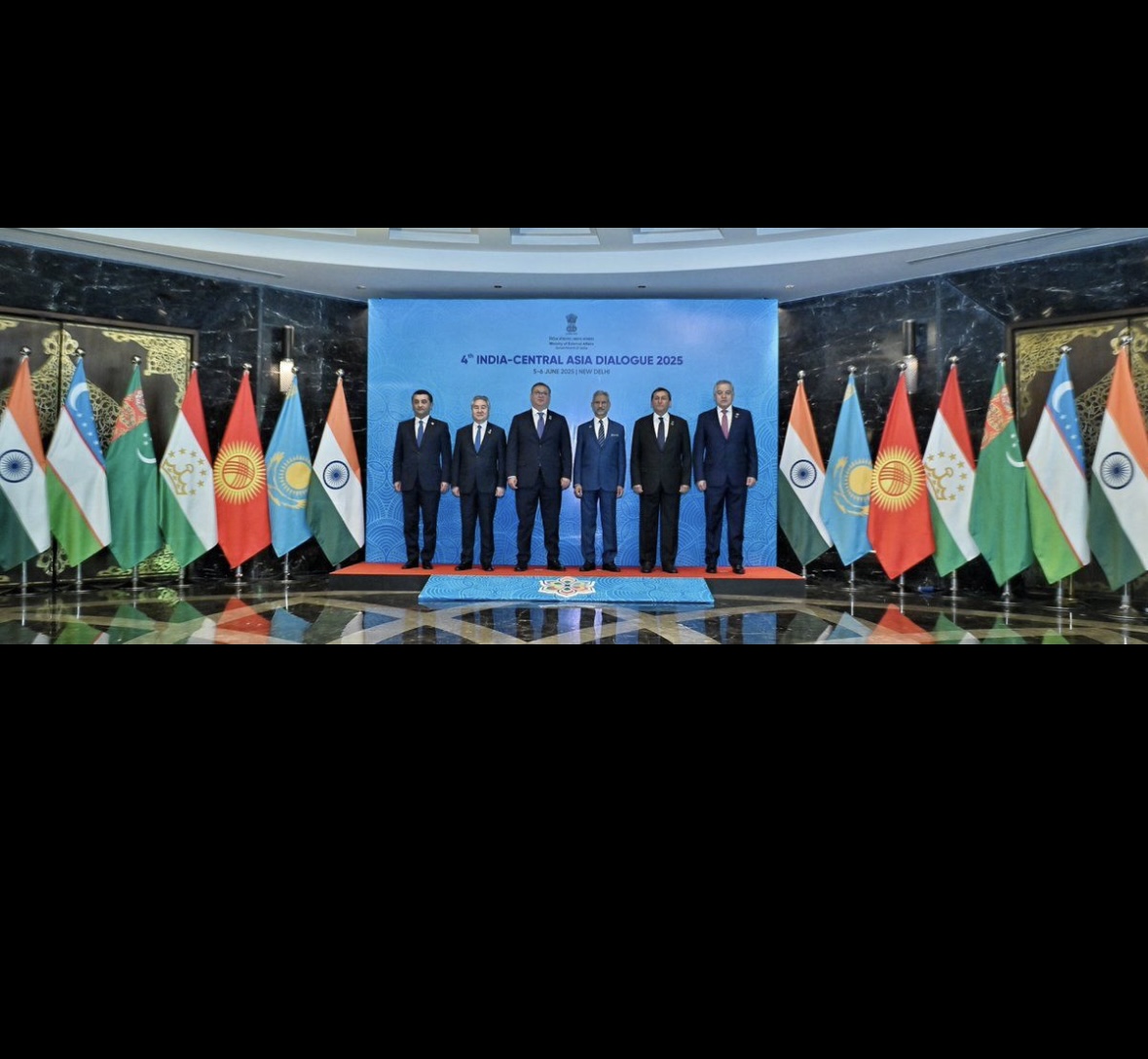
New Delhi, June 6 – India and the five Central Asian republics—Kazakhstan, Kyrgyzstan, Tajikistan, Turkmenistan, and Uzbekistan—gathered in New Delhi for the 4th edition of the India-Central Asia Dialogue, a high-level multilateral meeting of foreign ministers aimed at enhancing strategic, economic, and security cooperation. The meeting comes as New Delhi accelerates its outreach to what it calls its “Extended Neighbourhood,” in response to both economic opportunities and evolving security threats in the region.
Ahead of the main event, ministers took part in the G2G India-Central Asia Business Council meet, focusing on bolstering trade partnerships and scouting new investment avenues across sectors including infrastructure, energy, and fintech. The forum marked a growing convergence between diplomatic outreach and economic pragmatism.
Dialogue Turns Strategic Amid Regional Tensions
While traditionally geared toward improving trade and connectivity, this year’s Dialogue took place under the shadow of heightened India-Pakistan tensions, and the recent terror attack in Pahalgam, Jammu & Kashmir, served as a rallying point for unified condemnation. Ministers collectively emphasized the urgent need for adopting the long-pending UN Comprehensive Convention on International Terrorism, reflecting a shared concern over regional instability spilling across borders.
From Roads to Digital Rails: Connectivity Reimagined
Physical connectivity remains a core priority, with renewed commitments to infrastructure projects like the International North-South Transport Corridor (INSTC) and Chabahar Port. But this year’s Dialogue pushed beyond the traditional, as financial integration took center stage.
Ministers endorsed expanding digital payment frameworks, strengthening interbank linkages, and trading in national currencies—a move that not only aligns with India’s push for de-dollarization but also mirrors broader BRICS ambitions to reshape global financial structures.
Termiz Hub and Afghanistan’s Reintegration
In a noteworthy announcement, the ministers welcomed the operationalization of a regional logistics hub in Termiz, Uzbekistan, which will serve as a critical node for humanitarian assistance and regional trade with Afghanistan. The project is seen as a strategic lever to stabilize Afghanistan’s fragile economy and anchor it in Central Asia’s evolving supply chains. Uzbek scholar Eldaniz Gusseinov has spotlighted the hub’s growing importance in reshaping regional trade routes.